
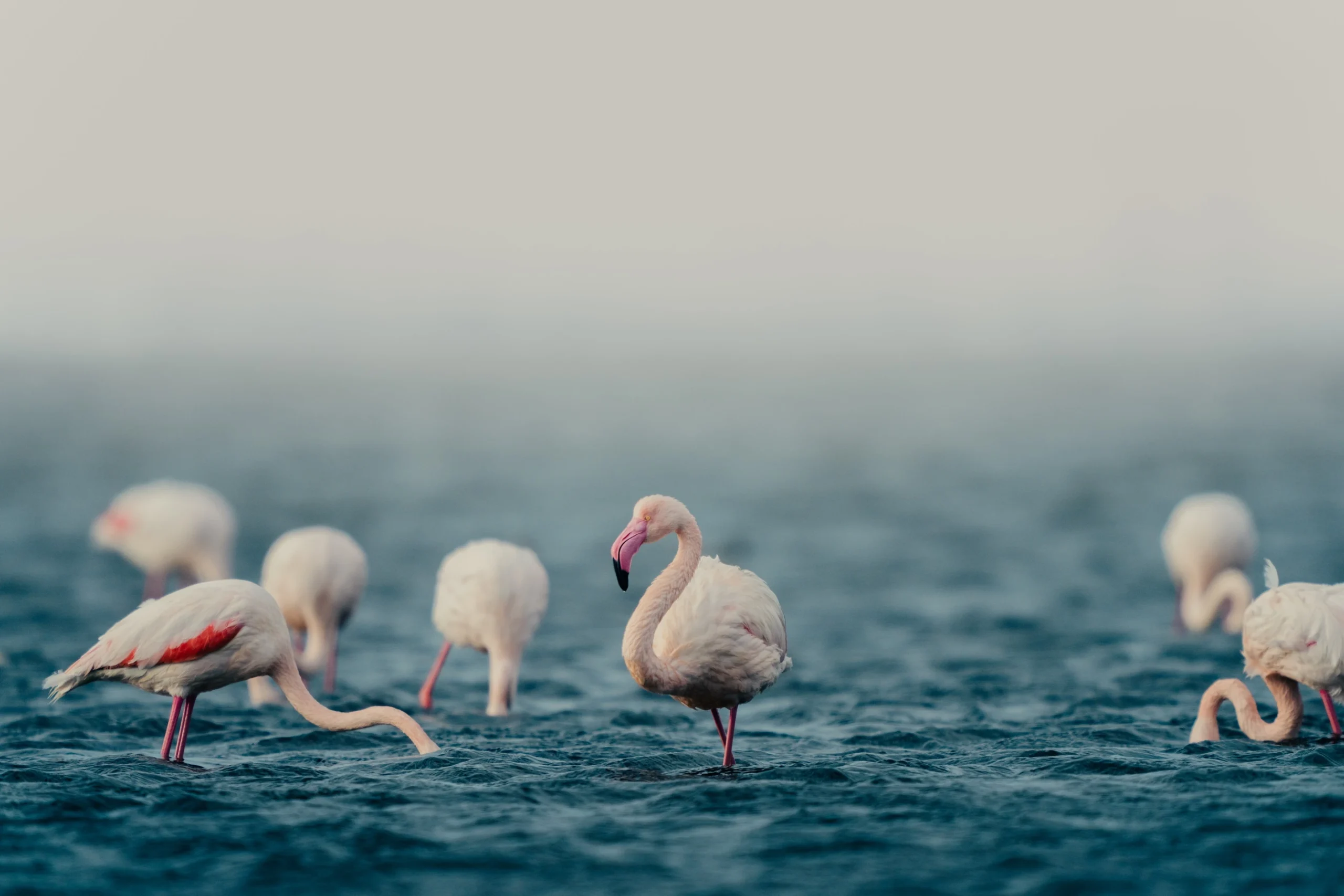
Two flamingo species share the Walvis Bay lagoon: the greater flamingo, larger and paler with a black-tipped bill, and the smaller, deeper-pink lesser flamingo. Both are present year-round, with numbers peaking between November and March as migrant birds arrive.
Why they’re pink
Flamingo colour comes directly from diet. Lesser flamingos feed largely on blue-green algae, which gives them a deeper, more vivid pink. Greater flamingos have a broader diet including small invertebrates, resulting in a paler overall colour, a useful way to tell the two species apart at a distance even before comparing size.
A protected wetland
The lagoon has been a Ramsar-protected wetland since 1995, recognising its importance as one of the most significant coastal bird habitats in Southern Africa. That protection, combined with the productivity of the nutrient-rich water here, is why flamingo numbers at Walvis Bay are consistently among the highest anywhere on the African Atlantic coast.
Best viewing
See the full lagoon guide for the best viewing spots, including the free public walkway that runs directly alongside the water.
Frequently asked questions
Which flamingo species is more common at Walvis Bay?
Both are regularly seen, often mixed together in the same feeding areas, though greater flamingos tend to be somewhat more numerous overall.
Do flamingos breed at Walvis Bay?
Walvis Bay is mainly a feeding and wintering ground rather than a primary breeding site; flamingos here often breed further inland when conditions allow.
Ready to book?
Three decades of catamaran cruises on the bay, kayaking among the seals at Pelican Point and 4x4 trips through the dunes to Sandwich Harbour, under the wide-open Namib sky, with a Walvis Bay crew who know every tide and wind on this coast.