
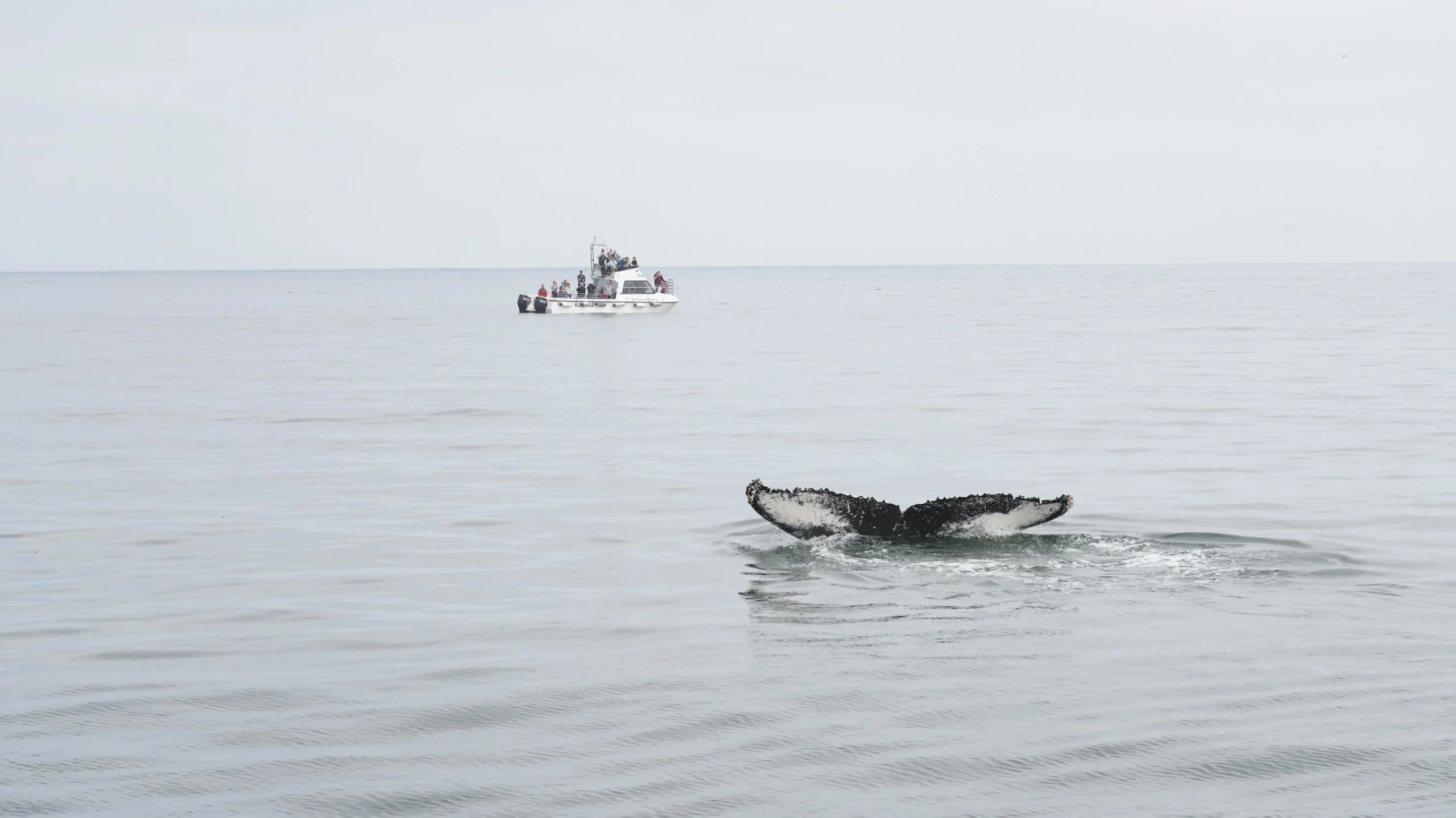
Humpback and southern right whales migrate along the Namibian coast roughly between June and November, with sightings most concentrated in July and August.
Two species, different habits
Humpback whales are known for spectacular surface behaviour (breaching, tail slapping, and pectoral fin waving), which makes them a favourite sighting when they do appear. Southern right whales move more slowly and spend more time at the surface, recognisable by the rough, pale callosities on their heads rather than a dorsal fin, which they lack entirely.
A population still recovering
Both species were hunted heavily along this coast in the early twentieth century, and numbers dropped sharply as a result. Populations have been slowly recovering in recent decades, with sightings along the Namibian coast becoming more frequent as that recovery continues, making every sighting today a small sign of that longer-term rebound.
Sightings aren’t guaranteed
Whales are wild and migratory, so a sighting is always a seasonal bonus rather than a guarantee. They’re most often seen on our longer, full-day boat routes such as the Mola Mola Day Tour and Marine Dune Day Tour, simply because more time on the water means more chances.
Frequently asked questions
What’s the best month to see whales?
July and August tend to have the highest concentration of sightings, though the wider season runs June through November.
Do I need a special “whale watching” tour?
No: whales are a seasonal bonus sighting on our standard boat tours rather than a separate product, since sightings can’t be guaranteed on any single trip.
Ready to book?
Three decades of catamaran cruises on the bay, kayaking among the seals at Pelican Point and 4x4 trips through the dunes to Sandwich Harbour, under the wide-open Namib sky, with a Walvis Bay crew who know every tide and wind on this coast.